
Independence Hall, Philadelphia, Pennsylvania. (©2019, Michelle D. Novak, MI)
The Pursuit of History: The Road to Independence
Spring: April 24–26, 2026 | Philadelphia, Pennsylvania | SOLD OUT
The Pursuit of History: The Road to Independence was the fourth in our series of in-depth, small-group events on the creation of our nation 250 years ago and focused on the Continental Congress’s decision in July 1776 to declare these thirteen colonies separate from Great Britain.
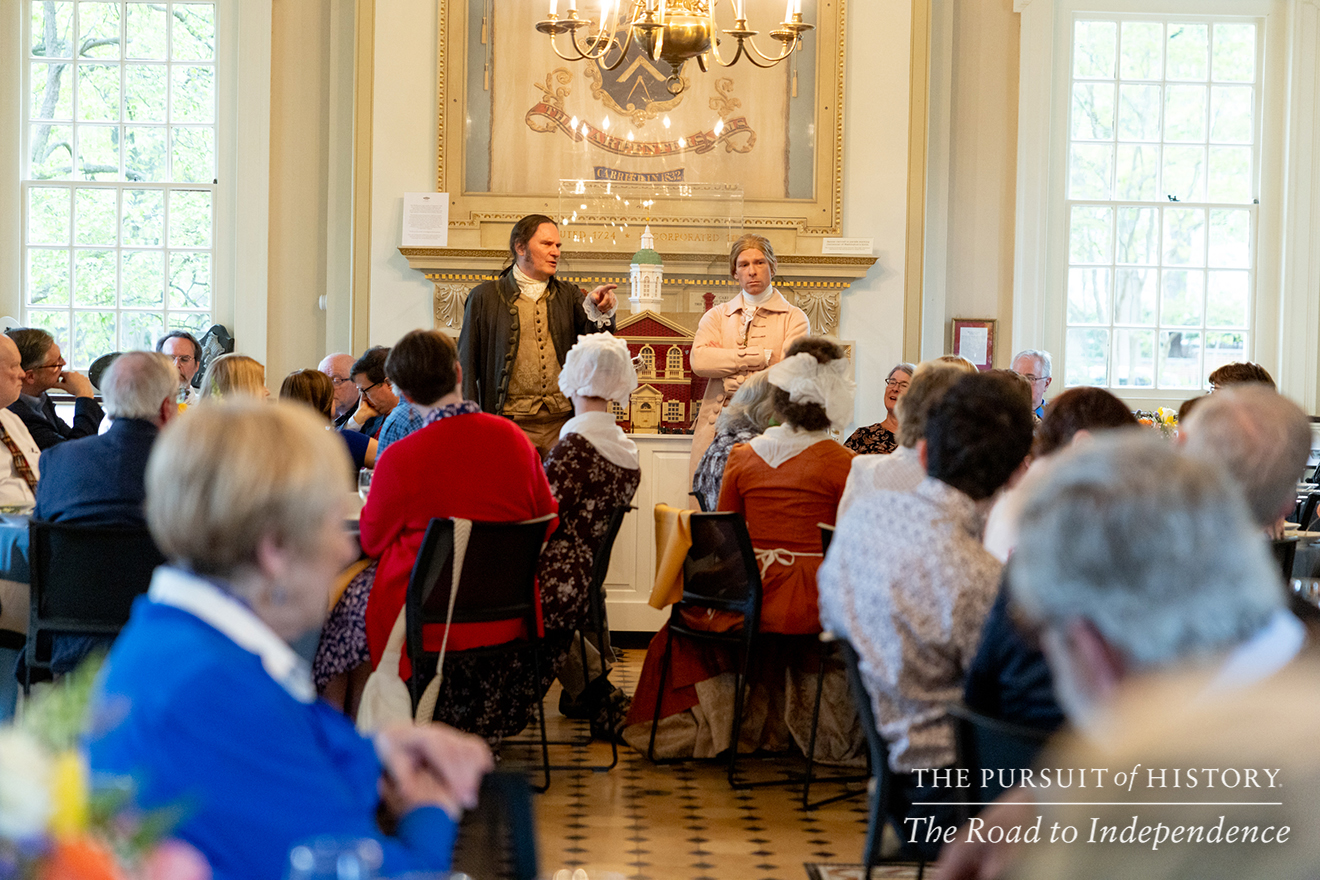
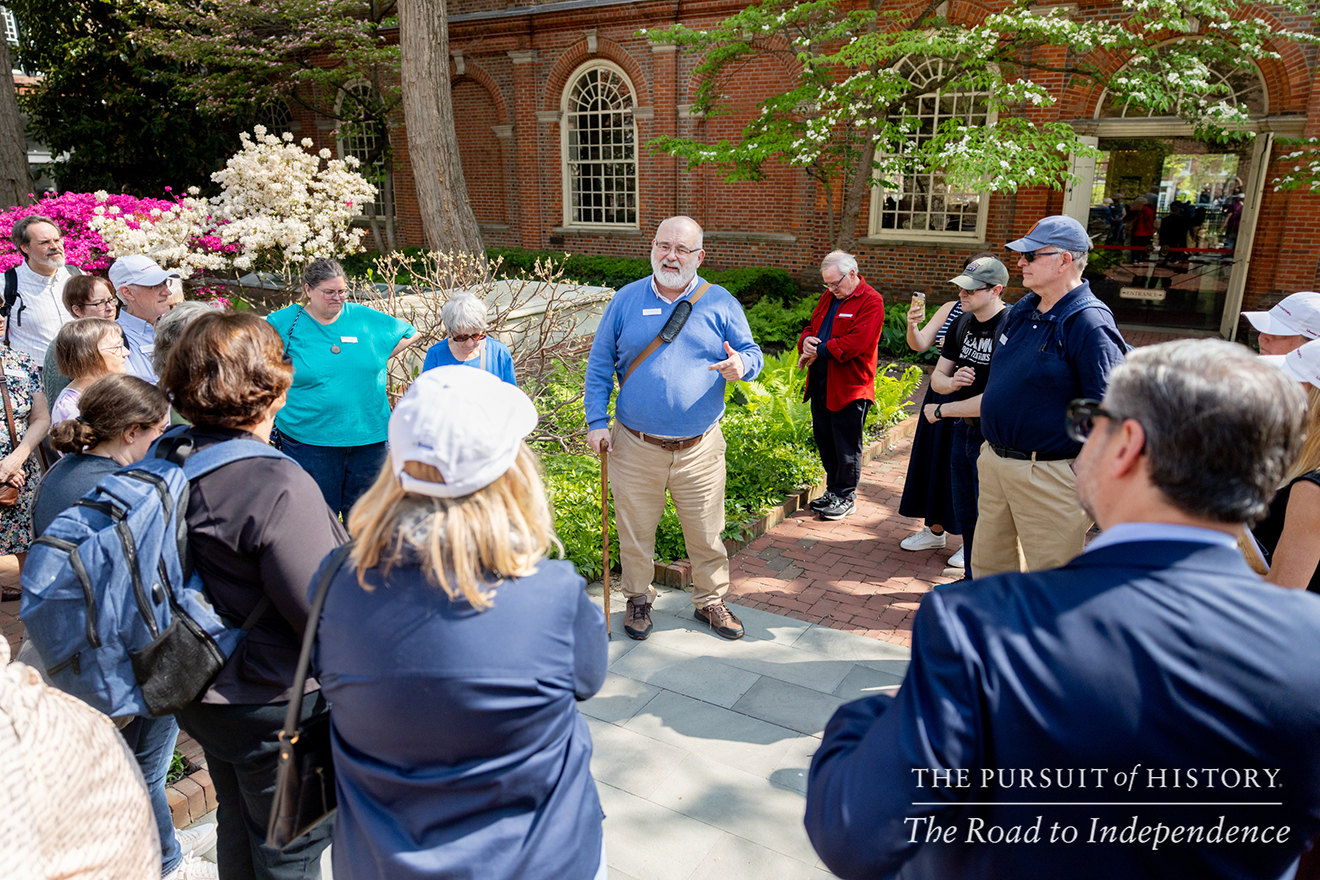
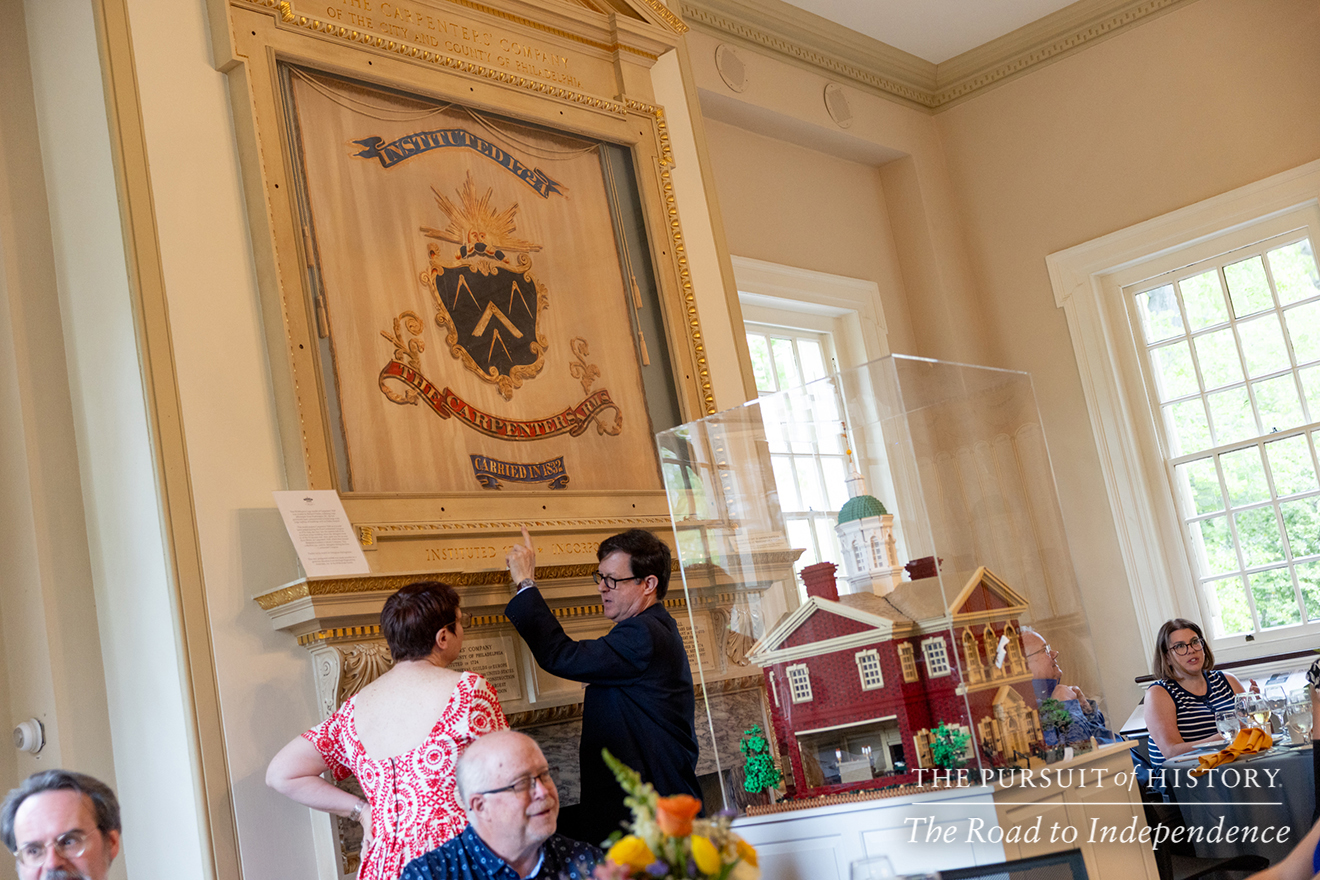
We spent three days exploring both the places where those delegates gathered and the ideas they discussed. We heard from some of the leading experts on this historic moment, and even dined with a few guests from July 1776 in a special “Dinner with the Founders” in Carpenters’ Hall.
Event Programs
In the spring of 1776, the delegates gathered at the Second Continental Congress in Philadelphia faced a momentous choice. All thirteen of their colonies were free of royal governors and the king’s military. Was this the right time to break off from the British Empire? Some respected leaders argued that the colonies might still gain autonomy within the system. Others wondered if the people were ready for republican government. And since the British army and navy were sure to return, how could this collection of states maintain their independence?


Presenters
Program Director J. L. Bell
J. L. Bell is the program director for this and other Pursuit of History Weekends on the 250th anniversary of the American Revolution. He shares daily articles on his Boston 1775 website and wrote The Road to Concord: How Four Stolen Cannon Ignited the Revolutionary War. John will start the program by orienting us to the situation in North America in the spring of 1776.
George W. Boudreau, PhD
George W. Boudreau, PhD, is a cultural historian of eighteenth-century Anglo-America, focusing on material culture, historic spaces, and the world of Benjamin Franklin. He is currently Executive Director of the Ebenezer Maxwell Mansion museum in Germantown. He will provide an insider’s tour of the neighborhood where the Continental Congress met.
Jane E. Calvert, PhD
Jane E. Calvert, PhD, is a professor of history at the University of Kentucky. She is the founding director of the John Dickinson Writings Project and the author of Penman of the Founding (Oxford University Press, 2024), the first complete biography of America’s leading political writer of the late 1760s. You will receive her book after you register.
Christina R. Carrick
Christina R. Carrick is an Associate Editor at the Papers of Thomas Jefferson, having previously worked on the Robert Treat Paine Papers at the Massachusetts Historical Society. Her research interests include American Loyalists.
James P. McClure, PhD
James P. McClure, PhD, is General Editor at the Papers of Thomas Jefferson, with almost twenty years of experience working on the third President’s writings. He is a former president of the Association for Documentary Editing.
Shawn David McGhee, PhD
Shawn David McGhee, PhD, is the author of No Longer Subjects of the British King: The Political Transformation of Royal Subjects to Republican Citizens, 1774–1776 (Westholme, 2024) and various articles. He is a full-time educator who has taught at several universities in greater Philadelphia.
Emily Sneff, PhD
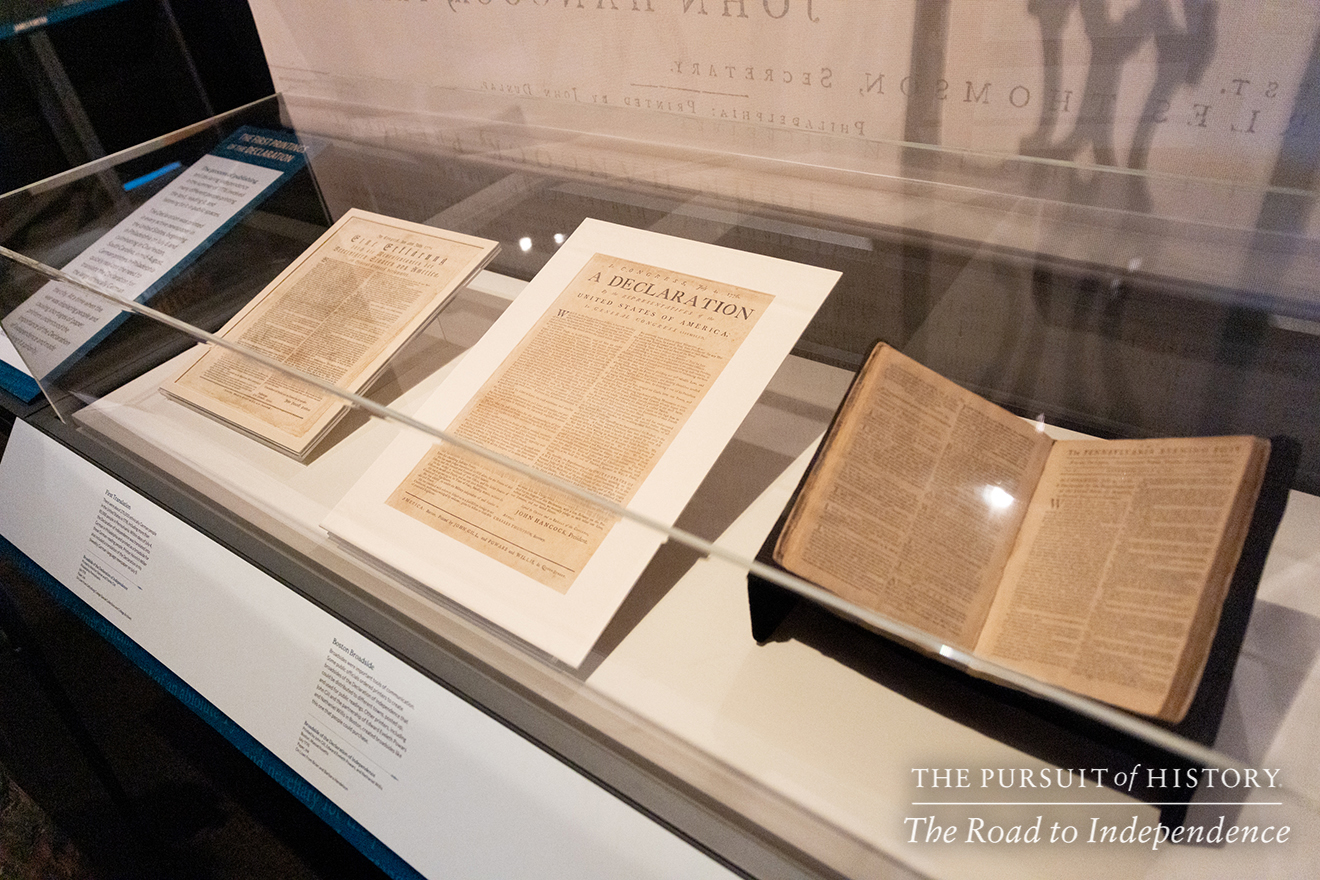
Emily Sneff, PhD, is the author of the upcoming book When the Declaration of Independence Was News (Oxford University Press, 2026). Her work has led her to locate unique copies of the Declaration in America and Europe, and she consulted on the Museum of the American Revolution’s new special exhibition “The Declaration’s Journey.” You will receive her new book once it is published on April 15.
Richard Vague
Richard Vague is the former Secretary of Banking and Securities for the Commonwealth of Pennsylvania. He is the author of The Banker Who Made America: Thomas Willing and The Rise of the American Financial Aristocracy, 1731–1821. His previous books include An Illustrated Business History of the United States, The Case for a Debt Jubilee, and The Paradox of Debt.
Richard is the president and co-founder of Widehall, a Washington, DC-based, globally engaged strategic communications, public policy, and events consulting firm and the managing partner of Gabriel Investments, an early stage venture capital company.
Thomaswilling.com, the website for Vague’s book, The Banker Who Made America, includes a detailed worksheet of the year-by-year sources of funding for the Revolutionary War.
Books
Included with Registration
Penman of the Founding: A Biography of John Dickinson by Jane E. Calvert and published in 2024 by Oxford University Press
When the Declaration of Independence Was News by Emily Sneff. This will be published by Oxford University Press on April 15 and we expect will be delivered to you on that date or shortly thereafter.
Recommended Reading
While these aren’t included in the Registration, we recommend them and if you bring your book the authors will be happy to sign them.
Independence: A Guide to Historic Philadelphia by George Boudreau, PhD, and published in 2011 by Westholme Publishing
No Longer Subjects of the British King: The Political Transformation of Royal Subjects to Republican Citizens 1774–1776 by Shawn David McGee, PhD, and published in 2024 by Westholme Publishing
Schedule + Sites for Spring 2026
Thursday, April 23
We’ll have an informal get together in the late afternoon or early evening before we start. Since Sam grew up in the Philadelphia area, he has promised to share historic insights, though cautioned that his personal experiences don’t extend quite to the period that is our focus. And as we did in Boston, if there is food or drink involved, folks will each pay for their own. We’ll send details of when and where to meet a few weeks before.
Friday–Saturday, April 24–25
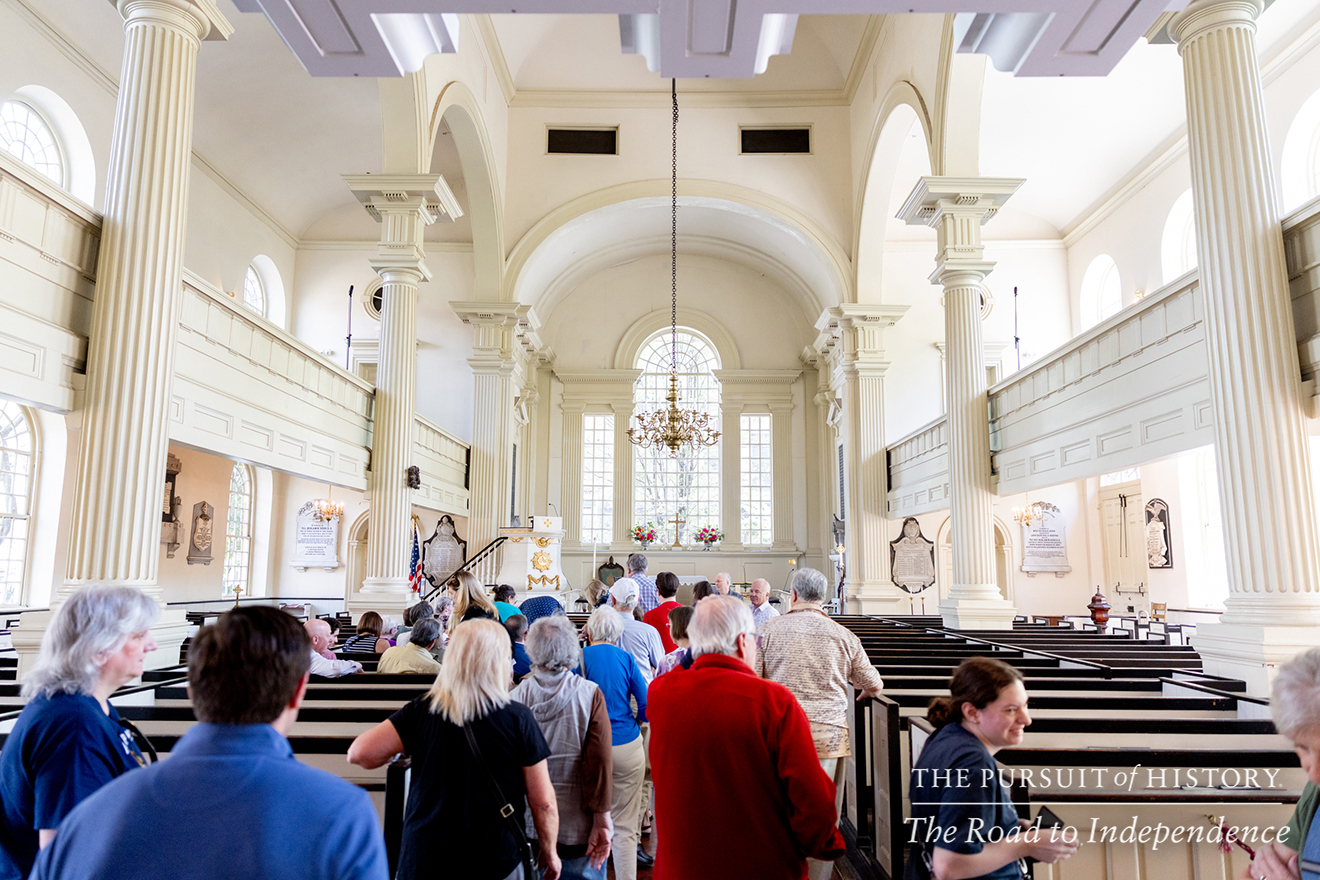
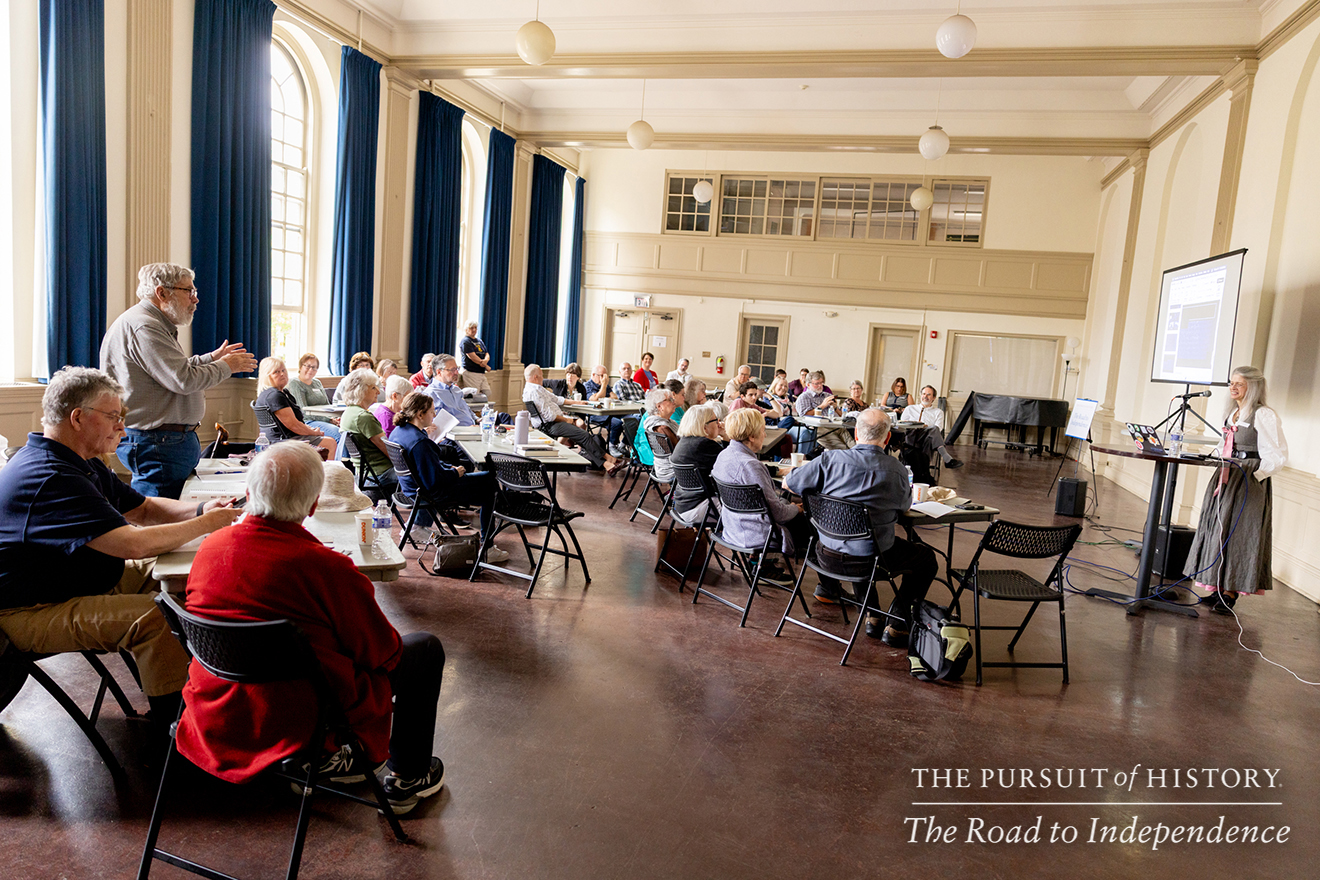
Our main meeting place will be the Neighborhood House of Christ Church. The adjacent Christ Church was constructed in 1727–1744. We will tour its sanctuary, where members of the Continental Congresses attended services.
Using the Neighborhood House as our base, we will visit:
- Carpenters’ Hall—The meeting-place for the First Continental Congress and for committees of the Second
- Independence Hall— The meeting-place for the Second Continental Congress, the Pennsylvania legislature, and later the Constitutional Convention)
- The Museum of the American Revolution
- Other historic buildings in the surrounding neighborhood
All sites are within walking distance (see the US National Park Service map below).
On Friday evening we’ll have a private dinner in Carpenters’ Hall, a wonderful, historic site which is privately owned and still serving the Carpenters’ Company of the City and County of Philadelphia today. The cost of this meal is included in registration.
[Read more about Christ Church, Neighborhood House, Carpenters’ Hall, and the Independence National Historical Park below.]
Sunday, April 26
Updated April 19: We will begin the morning with “Financing the Revolutionary War” with Richard Vague and then visit the American Philosophical Society to see their new exhibition, These Truths: The Declarations of Independence. The Museum opens at 10 am.
Registration
All of the programs in this series are limited to 40 people and previous attendees are given the first opportunity to register.
The cost for Friday and Saturday, including lunch and dinner, and any admissions, is $1,095. The Registration does not include lodging.
Cancellations must be received by February 23 to receive a refund. We recommend the trip insurance. (There’s no financial benefit to our organization, but in the Spring of 2025 it would have covered last minute changes for two people who registered had they included the insurance.)
Updated December 3, 2026 | SOLD OUT
All of the spots have been claimed. Sign up to be notified of future programs and browse the list of upcoming programs in the Series.
Travel and Lodging
Travel to the location and lodging are the responsibility of each guest.
As shown on the map below, all of our sites are within a few blocks of each other. We don’t yet have a hotel recommendation or room block. When we do, we’ll send an e-mail to those who have already registered.
The Road to Independence Venues

Independence National Historical Park, Philadelphia
Independence National Historical Park is one of the most walkable historic districts in the country. Spanning just a few compact blocks in the heart of Philadelphia, the park brings together iconic sites—Independence Hall, Carpenters’ Hall, Christ Church and Burial Grounds, the Liberty Bell, Congress Hall, Museum of the American Revolution, and more—along pedestrian-friendly streets lined with trees, plazas, and green spaces.
Visitors can easily explore the park on foot without the need for transportation, making it simple to wander from landmark to landmark at a relaxed pace. The surrounding Old City neighborhood also adds to the walkability, offering cafés, museums, shops, and quiet side streets that extend the experience beyond the park’s boundaries.
All of the venues for The Pursuit of History: The Road to Independence are within a few blocks of each other. If you need transportation, a taxi or Uber/Lyft is an affordable option. Within the area are hotels, B&Bs, and AirBnB options.
Download a neighborhood map from the US National Parks Service or explore the online interactive map.

Christ Church, Burial Grounds (christchurchphila.org)

Christ Church (christchurchphila.org)

Christ Church, Neighborhood House (christchurchphila.org)

Second Street North from Market Street, Birchs’ Views, Plate 15 (Library of Congress)

Christ Church, Sanctuary (christchurchphila.org)
Christ Church and Neighborhood House
Christ Church, the birthplace of the American Episcopal Church, was founded in 1695 as a condition of William Penn’s Charter.
Christ Church hosted members of the Continental Congress during the American Revolution and Presidents George Washington and John Adams in the first decade of the newly established Republic. Among early members were Benjamin and Deborah Franklin, Betsy Ross, John Penn (William Penn’s grandson), and signers of the Constitution and of the Declaration of Independence, including Robert Morris, Benjamin Rush, and Francis Hopkinson.
Dating to 1744, the current building has been cited as “our finest Early American church” and one of the finest Georgian structures in America. Its steeple (1754), financed by a lottery organized by Benjamin Franklin, is the work of Robert Smith, one of America’s earliest architects. For 56 years, the steeple made Christ Church the tallest structure in North America.
Built by the Christ Church parish to serve the residents of industrial Old City, Neighborhood House opened its doors in 1915. Today, in addition to housing the Christ Church Parish and Preservation Trust offices, Christ Church Neighborhood House serves a core constituency of cross-disciplinary performing artists who imagine new and experimental works in our ADA-accessible, 110-seat theater.
Christ Church Burial Ground is one of America’s most unique Colonial and Revolution-era graveyards, with 1,400 markers on two beautiful acres right in the heart of historic Philadelphia. The Burial Ground is the final resting place of some of our most prominent leaders, including Benjamin Franklin and four other signers of the Declaration of Independence. Maps of the Christ Church Burial Ground highlight many of the notable people buried here.
Participants in The Road to Independence will visit Christ Church Sanctuary and we will hold our sessions in the adjacent Neighborhood House.
Visiting the Christ Church Burial Grounds is highly recommended. During open hours, the Burial Ground staff provides information on the site and maps are available for a small donation.
Read more about the history of Christ Church at christchurchphila.org

Carpenters’ Hall, Exterior (carpentershall.org)

Carpenters’ Hall, Ledger (carpentershall.org)

Carpenters’ Hall, Lobby (carpentershall.org)

Carpenters’ Hall, Diapered Brick (carpentershall.org)

Carpenters’ Hall, Main (carpentershall.org)

Carpenters’ Hall, Fanlight (carpentershall.org)
Carpenters’ Hall of Philadelphia
Carpenters’ Hall hosted the First Continental Congress in 1774 and was home to Franklin’s Library Company, The American Philosophical Society, and the First and Second Banks of the United States.
Carpenters’ Hall has a long history as a meeting place. It has been the home to numerous tenants in the arts, sciences and commerce, and remains the headquarters of the oldest extant craft guild in America. It was the site of the First Continental Congress in 1774 and was occupied briefly by the British during the Revolution.
Some 215 men and women, all of them prominent architects, building contractors or structural engineers, carry on the 300-year tradition of The Carpenters’ Company of the City and County of Philadelphia—giving form to the future. From the 18th-century members who erected Independence Hall, Christ Church and Carpenters’ Hall to the members of today, innovation in design and technical achievement have contributed to their pre-eminent reputation.
Participants in The Road to Independence will visit Carpenters’ Hall as well as enjoy a private dinner at the Hall.
Read more about the history of Carpenters’ Hall at carpentershall.org
Supporters—Thank You!
Continuing in Autumn 2026 with The British Empire Strikes Back
Even as the Continental Congress and thirteen state governments moved toward independence, the British government planned to bring those territories back under control. A massive military force arrived off New York in the summer of 1776. In a series of major battles the British army under General Sir William Howe drove General George Washington’s Continental troops out of the city, then down through New Jersey. By late 1776 the Congress was evacuating Philadelphia, American soldiers’ enlistments were coming to an end, and Washington feared that the war might be lost.
We’ll examine those military developments by visiting battlefields and hearing from experts in military history.
Feedback from The Road to Independence Spring Attendees
Our guests came from Michigan, Illinois, Texas, Pennsylvania, Ohio, Arizona, Virginia, Maryland, Kansas, New York, Massachusetts, Rhode Island, New Hampshire, Connecticut, and New Jersey for three days of talks, walks, special tours, and dinners.
“The mix of talks and walks, the unforgettable dinner at Carpenters Hall with the surprise appearance of Elizabeth Powel, Benjamin Franklin, and friends, the Declaration of Independence presentation, the Christ Church tour, museum tours—all of it was absolutely engrossing.
I’ve been to Philly half a dozen times, but The Road to Independence gave me a whole new appreciation of this very walkable city.”
— Valerie, Illinois
“The speakers, tours and activities were great and provided me with a deeper appreciation of the events leading to and following the Declaration of Independence. I was especially impressed with the dinner in Carpenter’s Hall—and the reenactors—what a memorable evening.
I know that putting together a weekend like this requires a lot of thought and effort to coordinate all the different pieces and to ensure the participants are having a great experience. I wanted to reach out to you, and to everyone else who was working behind the scenes, to let you know that I very much appreciate the effort and feel that it was a great success.”
— Dave, Massachusetts
The Pursuit of History for America’s 250th
From Rebellion in New England (1774 Cambridge in 2024) to A Farewell to Arms (1783 New York City in 2033), join the most respected authorities in the field as we travel to two cities every year to understand not just what happened 250 years ago but why it happened.
This once-in-a-lifetime opportunity is limited to 40 attendees and each event usually sells out within days. Those who have attended previous Pursuit of History Weekends have the first opportunity to register.
View the entire series of programs through 2033 >
Sign-up for our weekly Pursuit of History | History Camp mailing to be notified. We also include updates on our weekly History Camp Author Discussions and our annual History Camp Boston.
Supporting The Pursuit of History
Contact Lee Wright, President of The Pursuit of History to learn more about how you can support the mission and programs of The Pursuit of History, the non-profit organization behind The Pursuit of History Weekends, History Camp, and weekly History Camp Discussions.